
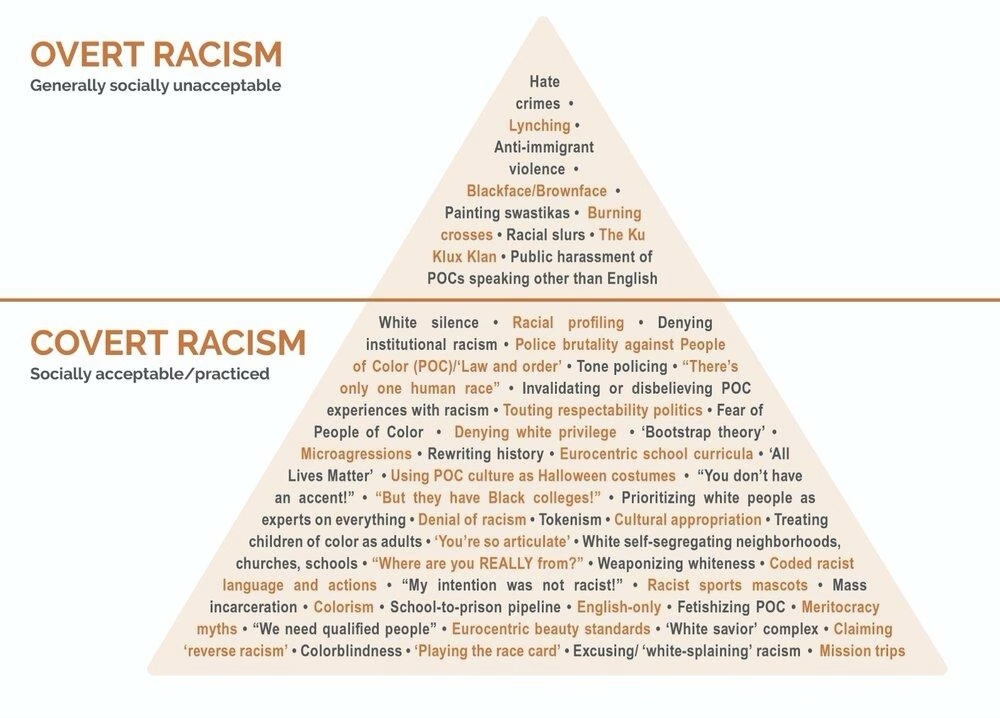
As you now know, there are different types of racism; there is covert (subtle, concealed) and overt (intentional, obvious) racism. While some forms of racism are easier to identify than others, all forms of racism have the power to negatively affect the person or group they are directed at. It is for this reason that we acknowledge that racism is a spectrum that ranges from covert acts (ex. phrases like, “Don’t blame me, I never owned slaves!”) to overt acts (ex. lynching – killing someone without for an alleged offense with/without legal trial).
Because racism is a spectrum, different types of racism are treated differently. For example, if someone were to go on a racist rant about someone in a store, calling them a racial slur, spitting on them, and physically attacking them, it is more than likely that the police would get involved and they would be arrested and tried for their offences. Though, when looking at how covert acts of racism are dealt with, we quickly see the difference in treatment they get. People of racialized groups tends to make up the largest population of prison inmates, usually overrepresenting their racial group. School systems in Canada have a tendency to stream Black children out of the post-secondary education system and off into the workplace because there is the belief that they are not smart. How are these issues addressed? The short answer is that they are not. These are just a few examples of covert racist acts that do not get nearly enough attention. Why? Because they are believed to be “not as important” or not exist in general. These types of issues are pushed to the sidelines for several reasons. One being that people do not think that they are important enough to warrant attention. Another reason is that they are not noticeable enough to the public for it to be dealt with. The last reason is that people know just how much work would have to go into fixing these issues (which takes time and costs money).
Activity 1
Looking at the following chart, take note of what forms of racism you, your family and/or friends have experienced, and what types of racism you have participated in. Then ask yourself these questions: Which forms of racism have you heard about? What haven’t you heard about? Were there acts of racism that you didn’t know were racist? If so, what were they?
Activity 2
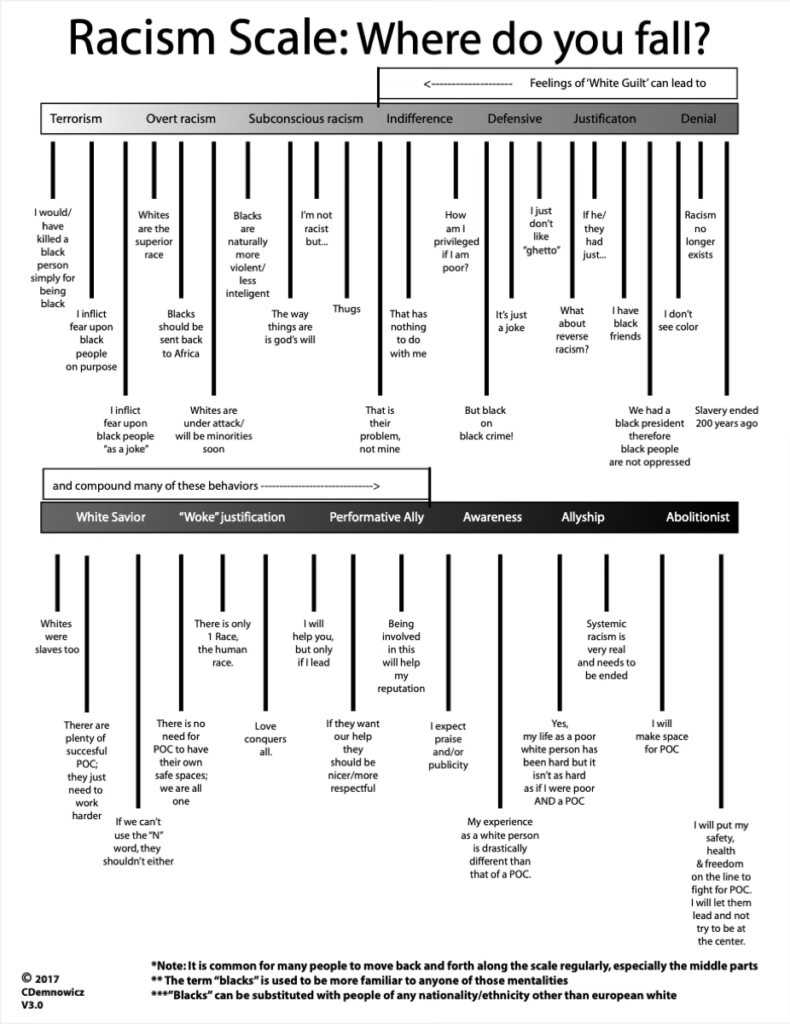
Looking at the following scale, determine where you fall on it. After doing so, ask yourself the following questions (be honest!):
- Where are you on each scale right now? Why do you think you fall there? What things in your life do you think has contributed to where you fall on the scale at this moment in your life?
- Have you been in other places on this scale throughout your life? If so, where? Why? What things in your past do you think contributed to where you fell on the scale before?
- Do you like where you are on the scale right now? Why or why not?
- If you are unhappy with where you are on the scale right now, where would you wish you were? How do you think you would achieve moving places on the scale?
- Where do you think is a healthy place to be on the scale? Why?
- Where do you think the people you surround yourself with (i.e., friends, family) are on the scale?
Leave a Reply